Our community’s insights shape better trials. Three current studies are looking for your input – from sustainable trial design to understanding the

Our community’s insights shape better trials. Three current studies are looking for your input – from sustainable trial design to understanding the
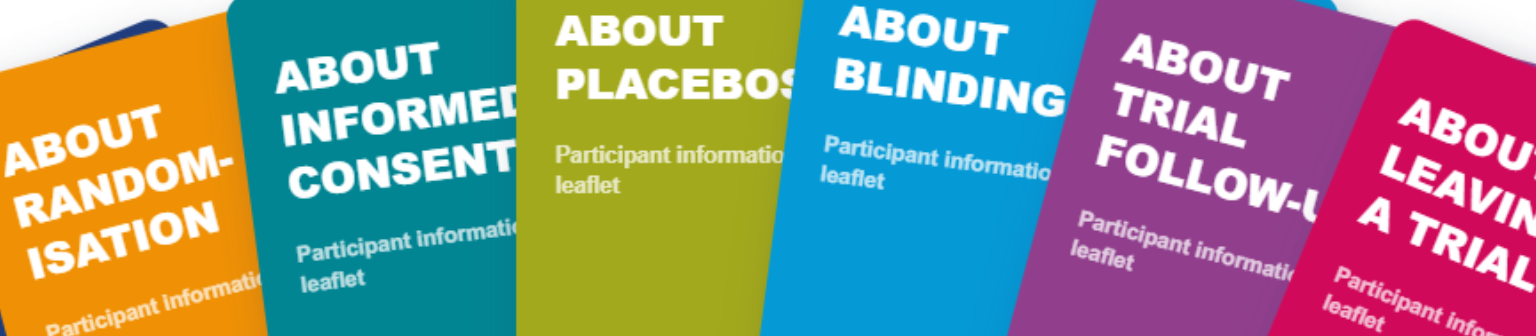
Hosted by Trial Forge, the EXCELSIOR library brings together participant information leaflets (PILs) and informed consent forms (ICFs) used in randomised trials. The
The International Clinical Trials Methodology Conference (ICTMC) comes to the ICC Birmingham on 14-17 September 2026, and the workshop programme is now confirmed –
From protocol design to participant retention, the Network’s PhD scholars are shaping how tomorrow’s trials are run – three new publications showcase
Dear colleagues and friends of the Network, welcome to the summer 2026 edition of the HRB-TMRN Network Newsletter. This issue brings together
This year marks a decade of transformative funding from the Health Research Board (HRB), a milestone that we are honored to celebrate.

The HRB-Trials Methodology Research Network (HRB-TMRN) is a collaborative initiative between several Irish and international higher education institutes and methodology centres.
We want to strengthen the methodology and reporting of trials in health and social care in Ireland so that they become more relevant, accessible and influential for our community of patients and other service users, practitioners, policymakers and the public. This is achieved through a programme of work relating to the methodology of trials and focused on (i) support, (ii) training and education, (iii) research and innovation and (iv) Public and Patient Involvement and Engagement.
HBR-TMRN & @ICCCTN are hosting a Trial Steering Committee workshop at @MoLI_Museum, Dublin. Strengthen your role in clinical trial oversight:
-Understand TSC responsibilities
-Handle high-stakes scenarios
-Network with experts from Ireland & UK
Register: https://www.eventbrite.ie/e/trial-steering-committee-training-workshop-tickets-1976005538759?aff=oddtdtcreator

Our Network is connected to over 70 national and international trials and trials methodology organisations. We are a partner within the MRC-NIHR-Trials Methodology Research Partnership in the UK. Our collaborations give us access to world leaders in trials methodology research.
Our trials methodology research expertise includes:
A SWAT is an embedded methodology research study within a planned or ongoing trial. We have been involved in SWATS for over 10 years and were involved in the first registered SWAT and we provide annual competitive funding for SWATs. Our members are active in developing and implementing SWATs across a variety of clinical trials nationally and internationally.
A core outcome set is agreed, standardised set of outcomes that should be measured and reported in all trials for a specific clinical area. We have been involved in developing core outcome sets across a range of clinical areas. We are proud to collaborate with the COMET Initiative in many of these.
Priority Setting Partnerships (PSPs) enable clinicians, patients and carers to work together to identify and prioritise evidence uncertainties in particular areas of health and care that could be answered by research.We have led or contributed to research agenda setting across a range of trials methodology topics and also promoted the use of prioritisation setting across clinical trial areas nationally.
We have specialized expertise in qualitative research in our Qualitative Research in Trials Centre (@QUESTSCentre). Here a team of advisors with expertise in case study research, ethnography, grounded theory, phenomenology and qualitative evidence synthesis are active in a wide range of trials methodology projects.

october 2026
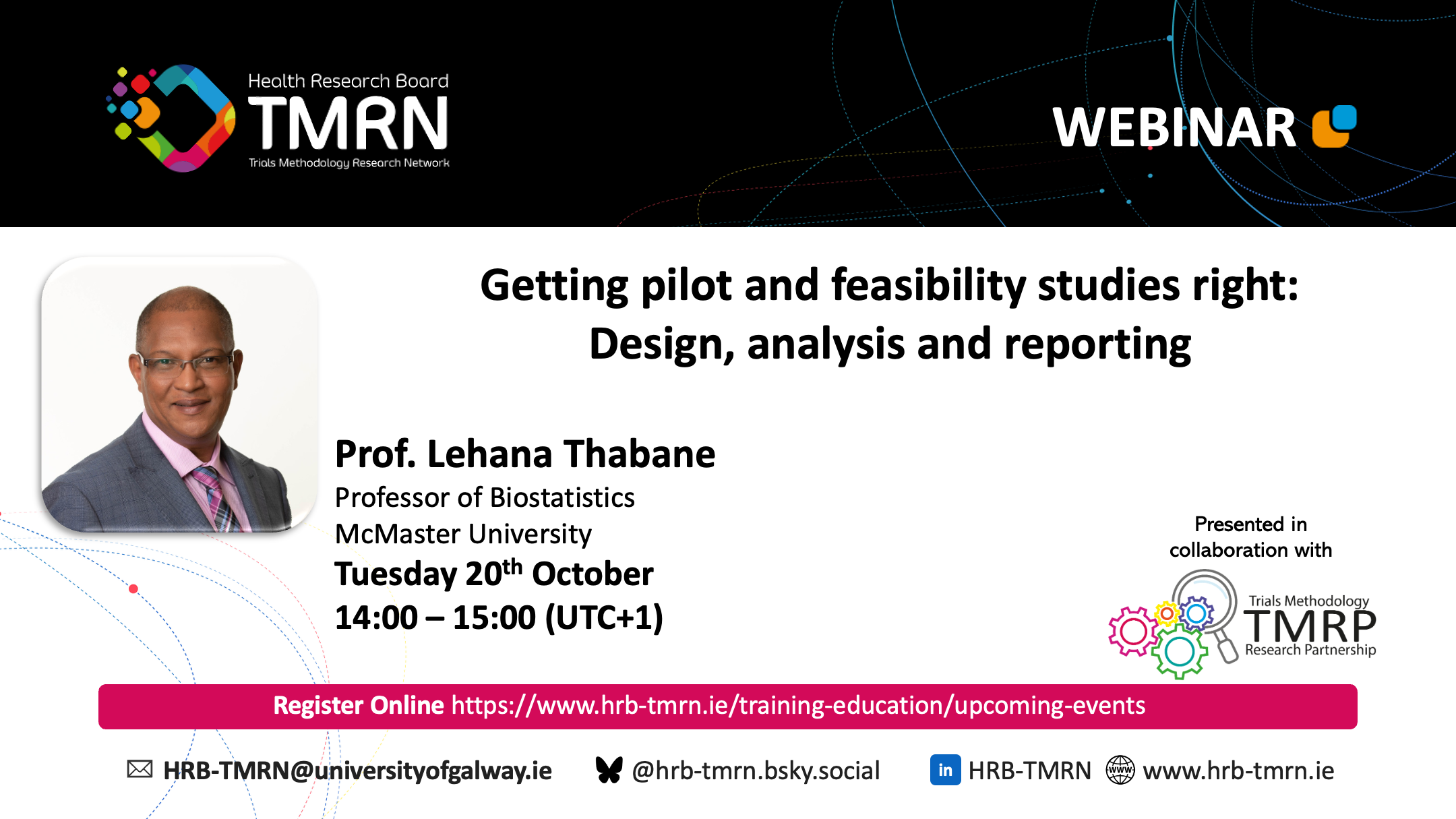
Click here to register Pilot and feasibility studies for phase III trials are primarily designed to provide feasibility evidence for large trials intended to generate evidence on effects
Pilot and feasibility studies for phase III trials are primarily designed to provide feasibility evidence for large trials intended to generate evidence on effects of benefit and harm of a drug or intervention. Conducting a pilot prior to the main study can enhance the likelihood of success of the main study and potentially help to avoid doomed main studies. This presentation will cover some key aspects of pilot studies for phase III trials including past practice history; the general reasons for conducting a pilot study; the relationships between pilot studies, and proof-of-concept studies; the challenges of and misconceptions about pilot studies; the criteria for evaluating the success of a pilot study; frequently asked questions about pilot studies; some ethical aspects related to pilot studies; and ongoing efforts to improve current and future practice
Speaker:
Dr. Lehana Thabane is a Vice President of Research at St Joseph’s Healthcare—Hamilton and St Joseph’s Health System; Scientific Director of the Research Institute at St Joseph’s Healthcare; Distinguished Professor University in the Department of Health Research Methods, Evidence, and Impact at McMaster University. He is a Fellow of the World Academy of Science, the Royal Society of Canada, the African Academy of Sciences, the American Statistical Association, the Society for Clinical Trials, the Canadian Academy of Health Sciences, and Honorary Foreign Associate Member of the Academy of Science of South Africa. He is the Past President of the Society for Clinical Trials 2022-2023. He is the recipient of the 2022 of the Statistical Society of Canada Award for Impact of Applied and Collaborative Work. He was a recipient of an honorary degree from Stellenbosch University in South Africa in December 2023 for his contribution to clinical trial methodology.
Dr Thabane is the Emeritus Founding Editor-in-Chief of the journal Pilot and Feasibility Studies; and he is a member of the editorial board for many journals including Trials, and BMJ Open. He has co-authored over 1300 peer-reviewed manuscripts leading to significant contributions and transformation of science, healthcare, and delivery of care in many clinical areas. Having mentored over 200 graduate students and junior faculty, Dr Thabane has won several teaching and mentorship awards for his commitment to building capacity in health research and nurturing the next generation of researchers
more
(Tuesday) 2:00 pm – 3:00 pm
november 2026
Background & aim: Trial Steering Committees (TSCs) provide the independent oversight at the heart of well-run clinical trials, yet practice varies and the role is often poorly understood. This online series
Background & aim:
Trial Steering Committees (TSCs) provide the independent oversight at the heart of well-run clinical trials, yet practice varies and the role is often poorly understood. This online series offers a structured introduction to TSCs – their role, remit and responsibilities – and builds confidence to serve as a TSC member or chair. Through short expert talks and facilitated discussion of real-world scenarios, it clarifies how TSCs work alongside sponsors, funders, investigators, Clinical Trials Units/Clinical Research Facilities, Patient and Public Involvement (PPI) contributors and Data Monitoring Committees. It is aimed at anyone involved in trial oversight – including researchers, clinicians, statisticians and trial coordinators/managers – and supports capacity and networking across Ireland and the UK.
Objectives:
Workshop 1 – TSC roles, remit and responsibilities
Date & time: 10:00 – 12:00, 10th November 2026
Understand the core oversight role of the TSC and how it differs from those of the sponsor, funder, Principal Investigator, CTU/CRF and Data Monitoring Committee; the specific responsibilities of TSC members and the Chair; how funders (HRB, NIHR) and sponsors define a “successful TSC”; and the essential contribution of PPI to TSC deliberations.
Workshop 2 – TSCs in practice: real-world scenarios
Date & time: 10:00 – 12:00, 1st December 2026
Apply TSC guidance to challenging real-world situations through facilitated groupwork – for example, when the trial team proposes major sample size changes due to poor recruitment, and when the Data Monitoring Committee recommends early reporting of unblinded data for efficacy or safety – and reflect on your own readiness to serve as a TSC member or chair.
Fee for one workshop: General €40
Fee for both workshops: General €70
TO REGISTER, CLICK HERE
Facilitators:
Professor Athene Lane, Bristol Medical School, University of Bristol
Professor Carrol Gamble, Liverpool Clinical Trials Centre, University of Liverpool
Professor Gian Luca Di Tanna, University of Applied Sciences and Arts of Southern Switzerland (SUPSI)
more
(Tuesday) 10:00 am – 12:00 pm
12nov1:00 pm2:00 pmWebinar: Prof. Thomas Jaki – Platform trials: only suitable for a pandemic?
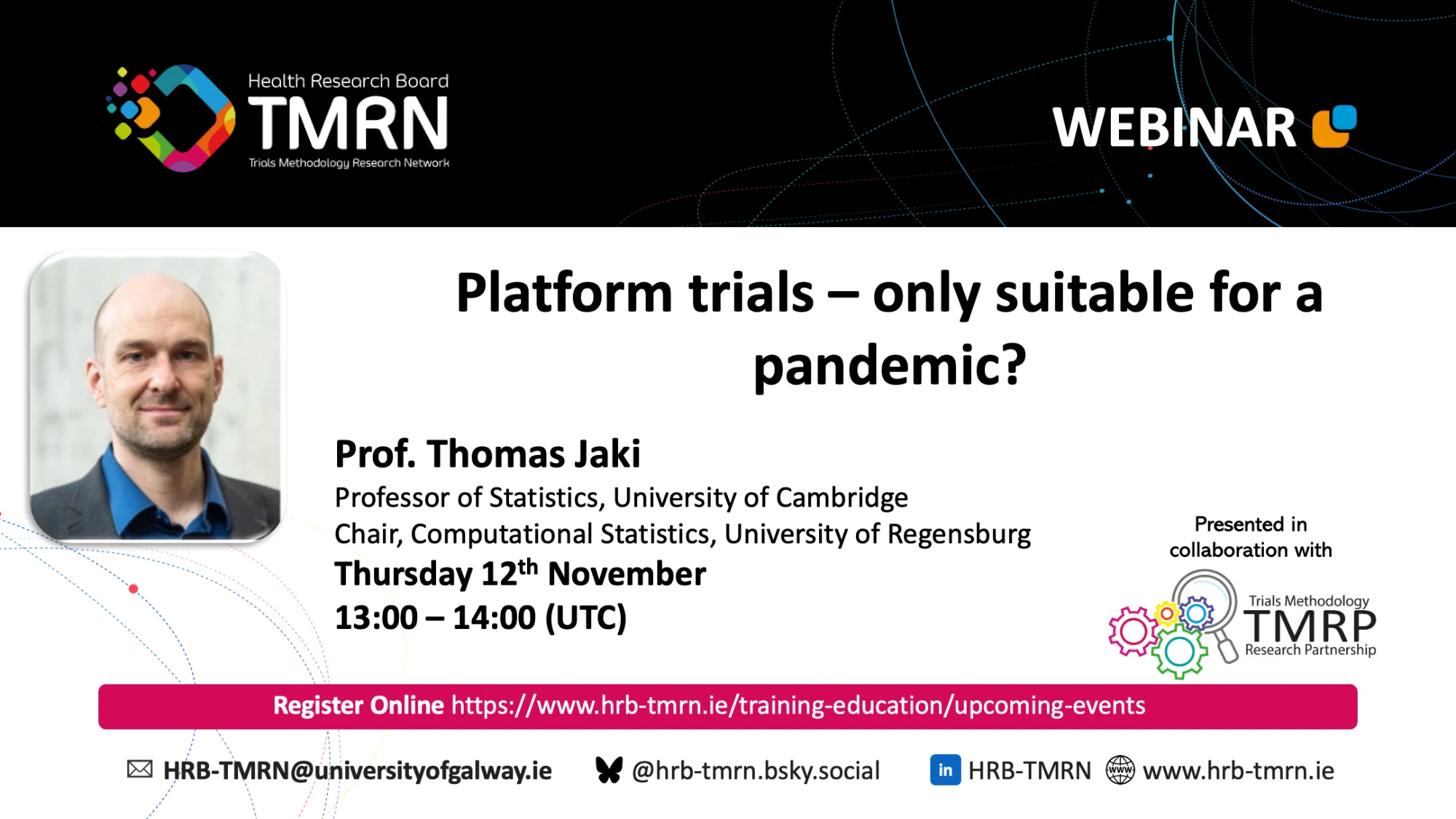
Click here to register The COVID-19 pandemic has create many challenges for clinical trials. On the one hand running studies have been severely affected while on the other
The COVID-19 pandemic has create many challenges for clinical trials. On the one hand running studies have been severely affected while on the other hand many challenges arose for trial looking at treatments for COVID. Platform trials have become a particularly popular solution to evaluate treatment for COVID. In this talk, Prof. Jaki will discuss his experiences with early COVID trials in China and how they influenced the design of the adaptive platform trial RECOVERY. He will also discuss some of the statistical aspect of its design and reflect on some of the open questions to make platform trials even more broadly applicable.
Speaker:
Prof. Thomas Jaki is the Professor of Computational Statistics at the University of Regensburg and MRC Professor of Statistics and Programme Leader in the Efficient Study Design theme at the MRC Biostatistics Unit. Prof. Jaki’s work focuses on developing and evaluating novel statistical methods for clinical studies. These methods are adapted for specific applications to ensure they can be used in the pharmaceutical industry and also in public sector research institutions. His current research focuses on model-based dose-finding trials as well as Master protocols.
more
(Thursday) 1:00 pm – 2:00 pm
18nov10:00 am12:00 pmIDMC Training Series (ONLINE) – Workshop One: Setting up an IDMCOnline
Please note: Due to planned industrial action in Irish universities on 14 October 2026, Session 1 has been moved to 18 November 2026 and the series will now
Please note: Due to planned industrial action in Irish universities on 14 October 2026, Session 1 has been moved to 18 November 2026 and the series will now run on 18 November 2026, 16 December 2026 and 20 January 2027. All sessions are online, 10:00 – 12:00 (Irish time).
Background & aim:
Independent data monitoring committees (IDMCs) are an important part of many clinical trials. This online series aims to give insight into how IDMCs work, who should sit on them, how to present to them and the decisions they make. We welcome those involved in any part of the IDMC process including clinicians, statisticians and trial coordinators/managers. The series will be led by Sharon Love and Elizabeth George who have extensive experience setting up, reporting to and sitting on multiple IDMCs.
Objectives:
Session 1 – Setting up an IDMC
Date & time: 10:00 – 12:00, 18th November 2026
Learn how to assess when independent oversight adds value to data monitoring committees and when this type of committee is needed along with understanding what independence means, and how to find the right IDMC members balancing clinical expertise, statistical insight and regulatory expectations.
Session 2 – The IDMC Meeting
Date & time: 10:00 – 12:00, 16th December 2026
Understand what key requirements are needed for a IDMC charter, as well as what should be included in IDMC reports to support robust and transparent discussions during the closed sessions. In addition learn when and how stopping guidelines are applied.
Session 3 – IDMC Decision making
Date & time: 10:00 – 12:00, 20th January 2027
Understand who is responsible for key decisions in a trial and how they interact with the IDMC, what would constitute a quorate meeting and how the IDMC’s recommendations influence the running of the trial. Examine real-world case studies to see how IDMC decisions reflect ethical considerations and shape trial impact.
Workshop 1 ONLY fee: General €40
Overall fee for 3 workshops: General €100
TO REGISTER, CLICK HERE
Facilitators:
Associate Professor Sharon Love, Innovative Clinical Trials Unit, University College London
Dr Elizabeth George, Innovate Clinical Trials Unit, University College London
more
(Wednesday) 10:00 am – 12:00 pm
The National Institute for Health and Social Care Research (NIHR), as well as other funders, are increasingly requiring Knowledge Mobilisation approaches to be incorporated into research grant applications to strengthen
The National Institute for Health and Social Care Research (NIHR), as well as other funders, are increasingly requiring Knowledge Mobilisation approaches to be incorporated into research grant applications to strengthen pathways to impact. Knowledge mobilisation is used to share knowledge between different communities, to create new knowledge and catalyse change.
Academics at the Applied Research Collaboration South West have been exploring and developing these approaches for the past decade and have worked with colleagues at the NIHR. This course will introduce the key concepts and definitions in the field and the latest developments. It will also take attendees through the process of designing a Knowledge Mobilisation plan for a research project.
Date: 30th November 2026
Fee: £250
Location: Online
For more information and to register, click here
Please contact short-course@bristol.ac.uk with any questions.

more
(Monday) 9:00 am – 5:00 pm
december 2026
Background & aim: Trial Steering Committees (TSCs) provide the independent oversight at the heart of well-run clinical trials, yet practice varies and the role is often poorly understood. This online series
Background & aim:
Trial Steering Committees (TSCs) provide the independent oversight at the heart of well-run clinical trials, yet practice varies and the role is often poorly understood. This online series offers a structured introduction to TSCs – their role, remit and responsibilities – and builds confidence to serve as a TSC member or chair. Through short expert talks and facilitated discussion of real-world scenarios, it clarifies how TSCs work alongside sponsors, funders, investigators, Clinical Trials Units/Clinical Research Facilities, Patient and Public Involvement (PPI) contributors and Data Monitoring Committees. It is aimed at anyone involved in trial oversight – including researchers, clinicians, statisticians and trial coordinators/managers – and supports capacity and networking across Ireland and the UK.
Objectives:
Workshop 1 – TSC roles, remit and responsibilities
Date & time: 10:00 – 12:00, 10th November 2026
Understand the core oversight role of the TSC and how it differs from those of the sponsor, funder, Principal Investigator, CTU/CRF and Data Monitoring Committee; the specific responsibilities of TSC members and the Chair; how funders (HRB, NIHR) and sponsors define a “successful TSC”; and the essential contribution of PPI to TSC deliberations.
Workshop 2 – TSCs in practice: real-world scenarios
Date & time: 10:00 – 12:00, 1st December 2026
Apply TSC guidance to challenging real-world situations through facilitated groupwork – for example, when the trial team proposes major sample size changes due to poor recruitment, and when the Data Monitoring Committee recommends early reporting of unblinded data for efficacy or safety – and reflect on your own readiness to serve as a TSC member or chair.
Fee for one workshop: General €40
Fee for both workshops: General €70
TO REGISTER, CLICK HERE
Facilitators:
Professor Athene Lane, Bristol Medical School, University of Bristol
Professor Carrol Gamble, Liverpool Clinical Trials Centre, University of Liverpool
Professor Gian Luca Di Tanna, University of Applied Sciences and Arts of Southern Switzerland (SUPSI)
more
(Tuesday) 10:00 am – 12:00 pm
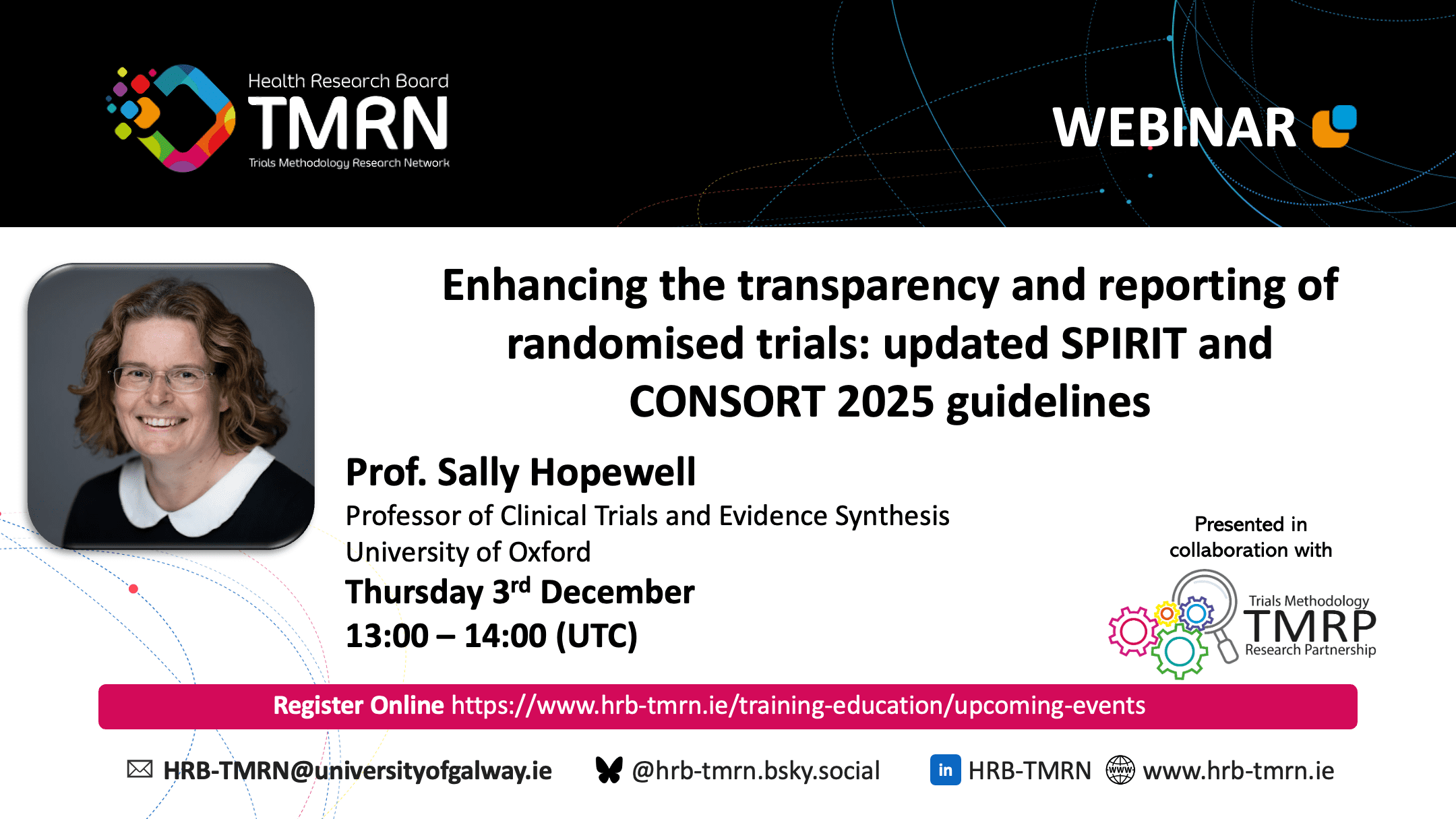
Click here to register The SPIRIT and CONSORT Statements are widely adopted reporting guidelines for reporting of trial protocols and results of randomised trials. This webinar will present
The SPIRIT and CONSORT Statements are widely adopted reporting guidelines for reporting of trial protocols and results of randomised trials. This webinar will present the updated SPIRIT 2025 and CONSORT 2025 guidelines (published simultaneously in the BMJ, JAMA, Lancet, Nature Med and PLoS Med) which have been extensively revised to reflect recent methodological advancements and feedback from end users. The updated guidelines followed established methodology involving evidence-based recommendations and expert consensus. Updating the SPRIT and CONSORT checklists together also allowed alignment of the content, providing consistent guidance on reporting a trial through its life-cycle, from design to results.
This webinar will highlight a number of substantive changes to SPIRIT 2025 and CONSORT 2025, including the rationale for the addition of new items and revising the content of existing items. Both checklists have also been restructured, with a new section on Open Science, which includes items conceptually linked, such as trial registration, where the trial protocol and statistical analysis plan can be accessed, sharing of de-identified participant level data, funding and conflicts of interest. The wording between CONSORT and SPIRIT checklist items has also been revised to clarify and simplify items. Together, SPIRIT 2025 and CONSORT 2025 provide updated, harmonised guidance for reporting randomised trial protocols and results, respectively. Their adherence has potential to enhance the transparency of trial reporting for the benefit of authors, editors, and others.
Speaker:
Professor Sally Hopewell is Professor of Clinical Trials and Evidence Synthesis based at the Oxford Clinical Trials Research Unit and Centre for Statistics in Medicine, University of Oxford. She is involved in leading the design and delivery of clinical trials within the OCRTU portfolio. Her key areas of research expertise are in the design, conduct and transparent reporting of randomised trials and systematic reviews. Prof Hopewell has published (h-index 86) more than 300 studies in these areas, and has been instrumental in leading the development of key reporting guidelines including the CONSORT 2025 and SPIRIT 2025 Statements which were published simultaneously in the BMJ, JAMA, Lancet, Nature Med and PLoS Med. She is also chief investigator on NIHR funded trials of in the areas of paediatric and adult rehabilitation and musculoskeletal sciences and co-investigator on a number of other NIHR funded trials and evidence synthesis. She has a particular research interest in data sharing, development of core outcome sets, pilot and feasibility studies, paediatric trials and trials of complex interventions.
more
(Thursday) 1:00 pm – 2:00 pm
This course aims to provide an introduction to the importance of inclusivity in health research, key issues to consider while designing your study and tools to optimise inclusivity. We will
This course aims to provide an introduction to the importance of inclusivity in health research, key issues to consider while designing your study and tools to optimise inclusivity. We will draw from work led by academics at the University of Bristol and other institutions, the literature on developing inclusive methodology and strategies used to reduce inequities in health research. Course content will provide an overview covering multiple under-served groups (e.g., people with autism, those experiencing socio-economic disadvantage), with a focus on strategies that enable inclusivity of ethnic minority groups.
This course aims to provide a broad understanding of the why and how of considering inclusivity throughout the life cycle of a research project, with an added emphasis on ethnic minority group inclusion.
Date: 10th December 2026
Fee: £250
Location: Online
For more information and to register, click here
Please contact short-course@bristol.ac.uk with any questions.
more
(Thursday) 9:00 am – 5:00 pm
16dec10:00 am12:00 pmIDMC Training Series (ONLINE) – Workshop Two: The IDMC MeetingOnline
Please note: Due to planned industrial action in Irish universities on 14 October 2026, Session 1 has been moved to 18 November 2026 and the series will now
Please note: Due to planned industrial action in Irish universities on 14 October 2026, Session 1 has been moved to 18 November 2026 and the series will now run on 18 November 2026, 16 December 2026 and 20 January 2027. All sessions are online, 10:00 – 12:00 (Irish time).
Background & aim:
Independent data monitoring committees (IDMCs) are an important part of many clinical trials. This online series aims to give insight into how IDMCs work, who should sit on them, how to present to them and the decisions they make. We welcome those involved in any part of the IDMC process including clinicians, statisticians and trial coordinators/managers. The series will be led by Sharon Love and Elizabeth George who have extensive experience setting up, reporting to and sitting on multiple IDMCs.
Objectives:
Session 1 – Setting up an IDMC
Date & time: 10:00 – 12:00, 18th November 2026
Learn how to assess when independent oversight adds value to data monitoring committees and when this type of committee is needed along with understanding what independence means, and how to find the right IDMC members balancing clinical expertise, statistical insight and regulatory expectations.
Session 2 – The IDMC Meeting
Date & time: 10:00 – 12:00, 16th December 2026
Understand what key requirements are needed for a IDMC charter, as well as what should be included in IDMC reports to support robust and transparent discussions during the closed sessions. In addition learn when and how stopping guidelines are applied.
Session 3 – IDMC Decision making
Date & time: 10:00 – 12:00, 20th January 2027
Understand who is responsible for key decisions in a trial and how they interact with the IDMC, what would constitute a quorate meeting and how the IDMC’s recommendations influence the running of the trial. Examine real-world case studies to see how IDMC decisions reflect ethical considerations and shape trial impact.
Workshop 2 ONLY fee: General €40
Overall fee for 3 workshops: General €100
TO REGISTER, CLICK HERE
Facilitators:
Associate Professor Sharon Love, Innovative Clinical Trials Unit, University College London
Dr Elizabeth George, Innovate Clinical Trials Unit, University College London
more
(Wednesday) 10:00 am – 12:00 pm
january 2027
Co-producing a research project is an approach in which researchers, practitioners and the public work together, sharing power and responsibility from the start to the end of the project (NIHR,
Co-producing a research project is an approach in which researchers, practitioners and the public work together, sharing power and responsibility from the start to the end of the project (NIHR, 2021). This course focuses on involving members of the public, to ensure more democratic, relevant research/ services that make a difference in practice. This course will be particularly useful for researchers considering using co-production, co-design or participatory action research, people co-designing services/ interventions or anyone wanting to find out more.
This course will provide an introductory overview of approaches where researchers and practitioners work in partnership with members of the public to co-produce/ co-design research, services or interventions. Participants will learn about the theory of these approaches and apply principles into action through case studies and their own/ others work. We draw on the expertise within the University of Bristol and beyond, with course tutors who are researchers, public involvement specialists and community members, who all have extensive experience in this field.
Date: 11th January 2027
Fee: £250
Location: Online
For more information and to register, click here
Please contact short-course@bristol.ac.uk with any questions.
more
(Monday) 9:00 am – 5:00 pm
Health research, whether population based, epidemiological or randomised controlled trials, must comply with a host of standards and legislation. The course is led by staff who have many years’ experience
Health research, whether population based, epidemiological or randomised controlled trials, must comply with a host of standards and legislation. The course is led by staff who have many years’ experience in health research and have been involved in a wide range of high impact health research projects. Invited tutors provide specialist expertise for complex areas such as Data Protection.
This course is designed for researchers who are new to health research, providing an overview of all you need to consider, and signposting further information and support. You will leave the course knowing which standards and legislation apply to your work, where to go for further support and armed with practical tips on how to fulfil your obligations as a health researcher. Please note that this is an introductory course and not designed for those already experienced in this field who may have specific, complex queries.
Date: 12th – 13th January 2027
Fee: £500
Location: Online
For more information and to register, click here
Please contact short-course@bristol.ac.uk with any questions.
more
12 (Tuesday) 9:00 am – 13 (Wednesday) 5:00 pm
20jan10:00 am12:00 pmIDMC Training Series (ONLINE) – Workshop Three: IDMC Decision MakingOnline
Please note: Due to planned industrial action in Irish universities on 14 October 2026, Session 1 has been moved to 18 November 2026 and the series will now
Please note: Due to planned industrial action in Irish universities on 14 October 2026, Session 1 has been moved to 18 November 2026 and the series will now run on 18 November 2026, 16 December 2026 and 20 January 2027. All sessions are online, 10:00 – 12:00 (Irish time).
Background & aim:
Independent data monitoring committees (IDMCs) are an important part of many clinical trials. This online series aims to give insight into how IDMCs work, who should sit on them, how to present to them and the decisions they make. We welcome those involved in any part of the IDMC process including clinicians, statisticians and trial coordinators/managers. The series will be led by Sharon Love and Elizabeth George who have extensive experience setting up, reporting to and sitting on multiple IDMCs.
Objectives:
Session 1 – Setting up an IDMC
Date & time: 10:00 – 12:00, 18th November 2026
Learn how to assess when independent oversight adds value to data monitoring committees and when this type of committee is needed along with understanding what independence means, and how to find the right IDMC members balancing clinical expertise, statistical insight and regulatory expectations.
Session 2 – The IDMC Meeting
Date & time: 10:00 – 12:00, 16th December 2026
Understand what key requirements are needed for a IDMC charter, as well as what should be included in IDMC reports to support robust and transparent discussions during the closed sessions. In addition learn when and how stopping guidelines are applied.
Session 3 – IDMC Decision making
Date & time: 10:00 – 12:00, 20th January 2027
Understand who is responsible for key decisions in a trial and how they interact with the IDMC, what would constitute a quorate meeting and how the IDMC’s recommendations influence the running of the trial. Examine real-world case studies to see how IDMC decisions reflect ethical considerations and shape trial impact.
Workshop 3 ONLY fee: General €40
Overall fee for 3 workshops: General €100
TO REGISTER, CLICK HERE
Facilitators:
Associate Professor Sharon Love, Innovative Clinical Trials Unit, University College London
Dr Elizabeth George, Innovate Clinical Trials Unit, University College London
more
(Wednesday) 10:00 am – 12:00 pm
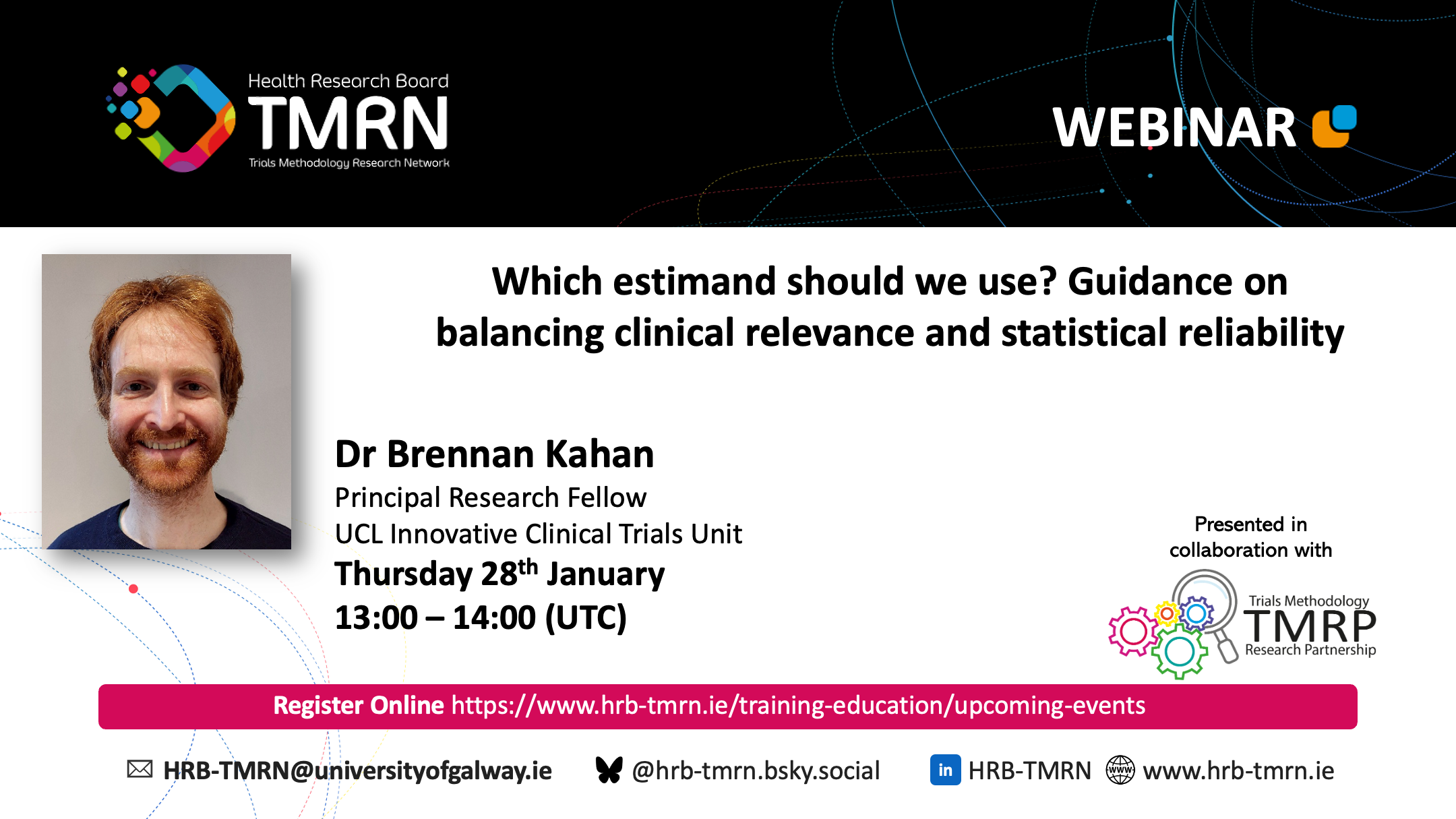
Click here to register The ICH E9(R1) addendum on estimands is becoming more commonly used in randomised trials. However, there is still limited guidance on which estimands should
The ICH E9(R1) addendum on estimands is becoming more commonly used in randomised trials. However, there is still limited guidance on which estimands should be used, or how they should be estimated. In this talk I will provide an overview of current proposals for choosing estimands, discuss the trade-offs between clinical relevance and statistical reliability, and discuss ongoing work to help investigators choose between different methods. I will then discuss the implications this has for which estimands and statistical analysis methods should be used in randomised trials.
Speaker:
Dr Brennan Kahan is Principal Research Fellow at the UCL Innovative Clinical Trials Unit. His research program is focussed on developing methods to improve the design, analysis, and reporting of randomised trials. His major research interests include the use of estimands in randomised trials, estimation methods for different intercurrent event strategies, and methods for complex trial designs such as cluster, non-inferiority, and factorial. He has co-authored over 130 publications, including the CONSORT 2025 and SPIRIT 2025 statements, led the CONSORT extension for factorial trials, and is currently updating the CONSORT extension for non-inferiority trials.
more
(Thursday) 1:00 pm – 2:00 pm
february 2027
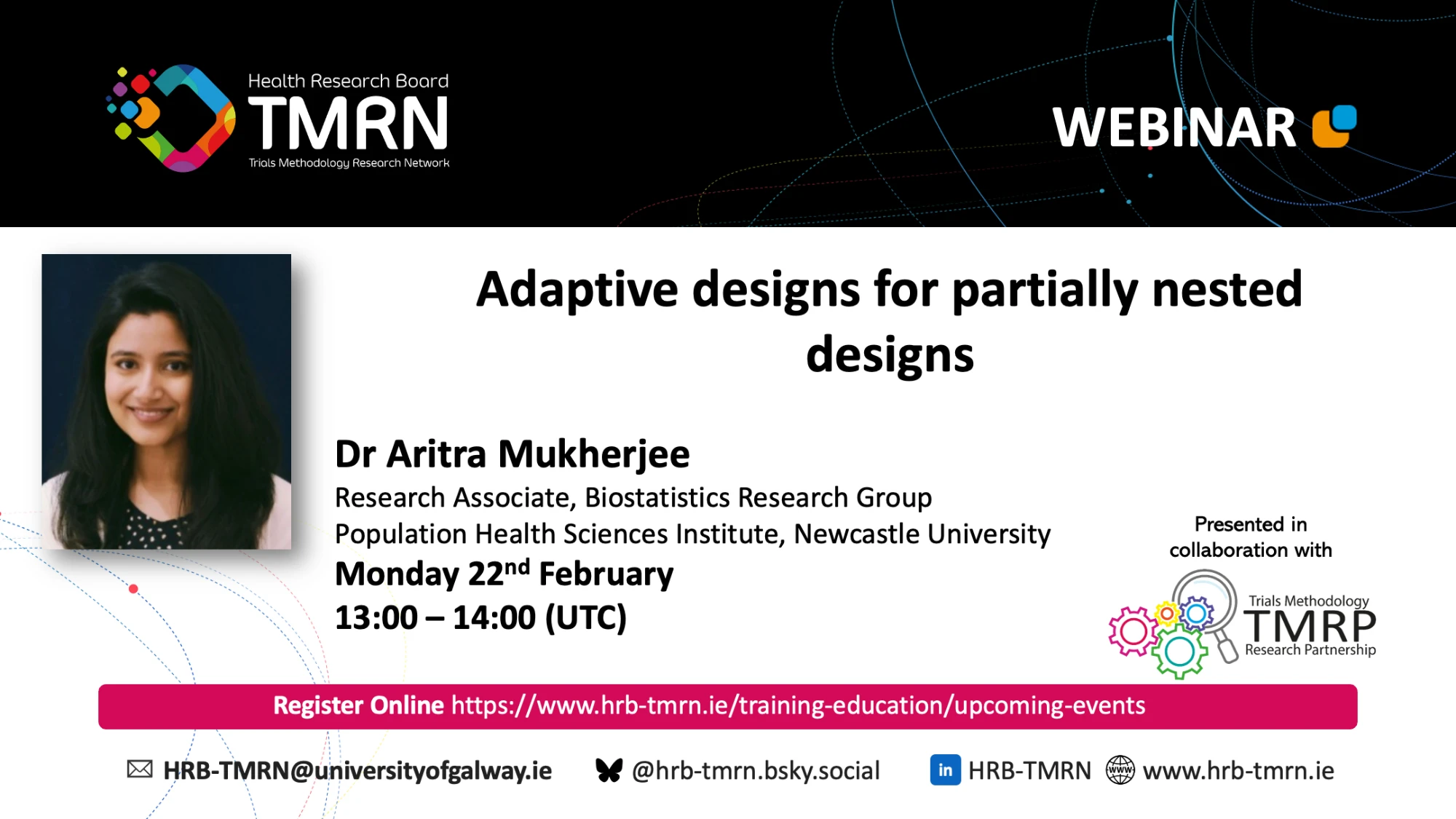
22feb1:00 pm2:00 pmWebinar: Dr Aritra Mukherjee – Adaptive designs for partially nested designs
Click here to register Speaker: Dr Aritra Mukherjee is a Research Associate in the Biostatistics Research Group, Population Health Sciences Institute, Newcastle University.
Speaker:
Dr Aritra Mukherjee is a Research Associate in the Biostatistics Research Group, Population Health Sciences Institute, Newcastle University.
(Monday) 1:00 pm – 2:00 pm
march 2027
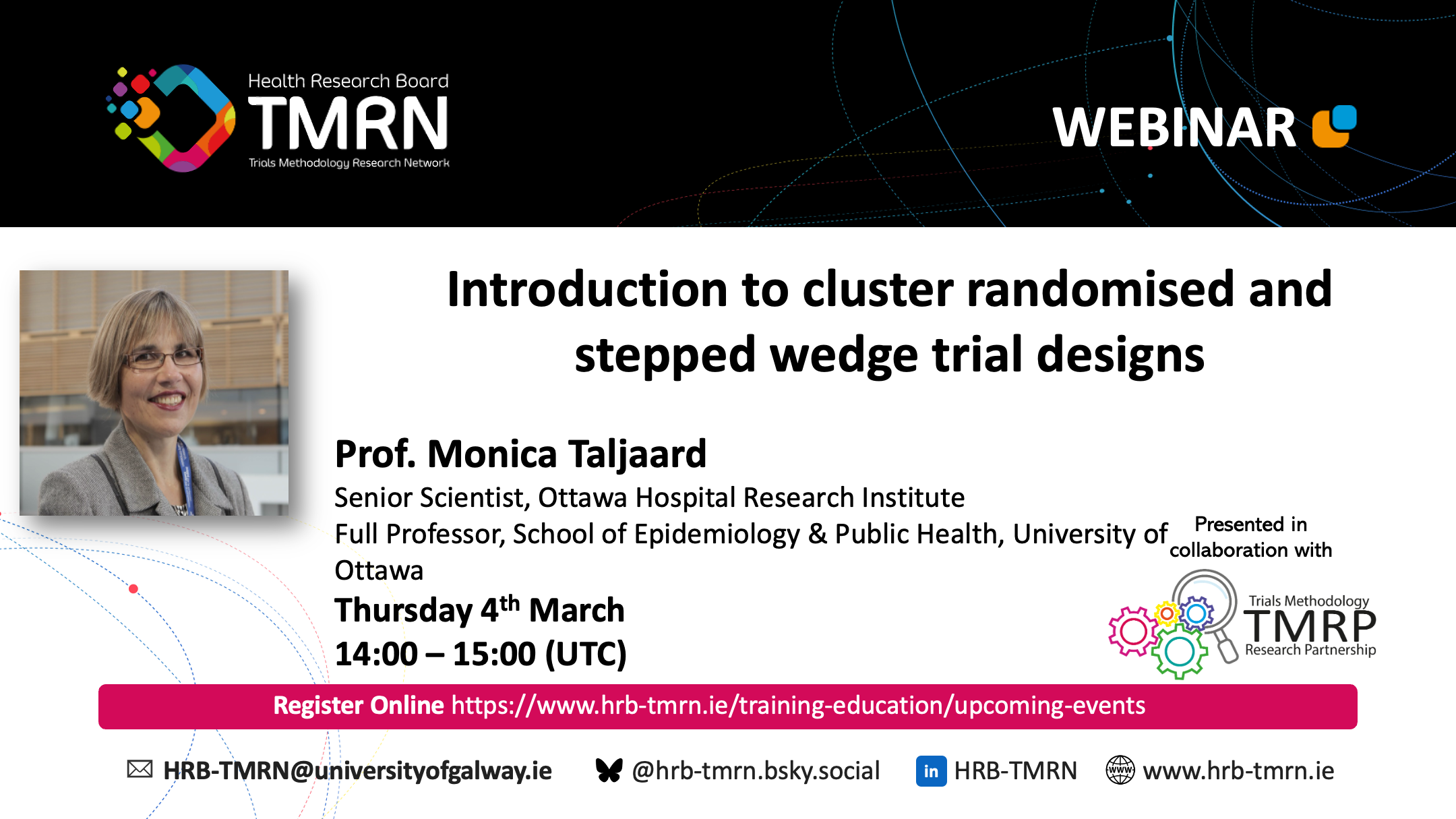
Click here to register The learning objectives of this webinar are: Recognize what cluster randomized and stepped wedge trials are Understand the concept of intracluster correlation and its implications for
The learning objectives of this webinar are:
Speaker:
Prof. Monica Taljaard is a Senior Scientist in the Clinical Epidemiology Program at the Ottawa Hospital Research Institute (OHRI) and Full Professor in the School of Epidemiology and Public Health at the University of Ottawa. Her main research interests are in the design, analysis and ethics of pragmatic and cluster randomized trials. As a methodologist with the Ottawa Methods Centre, she works with clinicians and researchers from a variety of backgrounds in the design and analysis of their studies including clinical trials and observational studies. She is Deputy Editor of Clinical Trials: Journal of the Society for Clinical Trials.
more
(Thursday) 2:00 pm – 3:00 pm

We work collaboratively and innovatively. Our doors are always open to new ideas in Trials methodology.

Involvement of all key stakeholders including patients and the public is central to what we do. This helps us ensure our work will matter most and achieve impact.

Capacity-building is central to all our work. This is essential to provide opportunity, invigorate perspective and build our research future.
Our Network operates across five University Partners,
each leading the way in trials methodology research and training